


|
|
|
|
by Editor Fernando Coelho
Edited and published by Yvette Depaepe, the 5th of October 2026
Seeing the conversation between haiku and photographs
One might argue that adding a title to a photograph reveals too much. It removes the viewer’s freedom to interpret it.
What you want to say may differ from what others see. Photography often works through suggestion and ambiguity, which titles can undermine. Words shouldn’t get in the way. They may be there together with your photograph if they add value. If your photograph is like a finger pointing to the moon, you don’t want any jewels on the finger to distract viewers from the moon.
But what if there is a middle path?
A way to pair images with words that don’t dictate meaning but instead dance alongside them, opening new dimensions of interpretation?
This is where I found haiku.
Pairing photographs with haiku
I love to rediscover lost photographs. Listen to them. Resurrect them and give them a new space to breathe. Over the past few months, I’ve explored the mindful practice of pairing photographs with the simple yet powerful three-line traditional Japanese poems known as haiku. This project has allowed me to revisit both recent and long-forgotten photographs.
Unlike titles that can narrow interpretation, haiku form a partnership with the photograph — neither dominating the other, but each enhancing the viewer’s experience. The photograph serves as the visual anchor; the haiku adds emotional depth without explaining away the mystery.
What makes a haiku?
Traditionally, a haiku is a short, unrhymed poem. In English, it typically follows a three-line, 5–7–5 syllable structure. Though brief, haiku can be challenging yet deeply rewarding to write. A typical haiku captures a single moment in time and often juxtaposes two images to create contrast or evoke emotion. To help indicate this “cut” between the two parts, many poems use punctuation, typically a dash ( — ) or an ellipsis ( … ). They also often start with lowercase and may not end with a period. This suggests the poem’s start and end are both “open,” broadening its effect.
The form originated in Japan centuries ago and has achieved worldwide success due to its elegant simplicity.
One of the most famous haiku, written by Japanese master Matsuo Bashō (1644–1694), exemplifies the form’s quiet power:
an old silent pond…
a frog jumps into the pond,
splash! Silence again.
This isn’t merely a description of what happens — it’s an invitation to experience the moment, to feel the contrast between stillness and disruption, to witness the return to silence with newly awakened senses. Now, picture these simple poems together with photographs.
A conversation between image and text
Photography frames single moments, capturing the essence of a scene in a single image. Street photography captures glimpses of human nature within an urban environment, often spiced with contrast or irony. It shares surprising similarities with haiku. Both art forms aim to distill complex experiences into their essential elements. They thrive on the tension between presence and absence, on what is shown and what is merely suggested.
I love to tell stories about photographs. I have a collection of short fictional tales inspired by some of them, which I call “Snapshots.”
Pairing haiku with photographs is a refreshing new challenge that can bring your images to a new dimension.
Let me give you a first example based on a photograph made in the center of Utrecht last December.
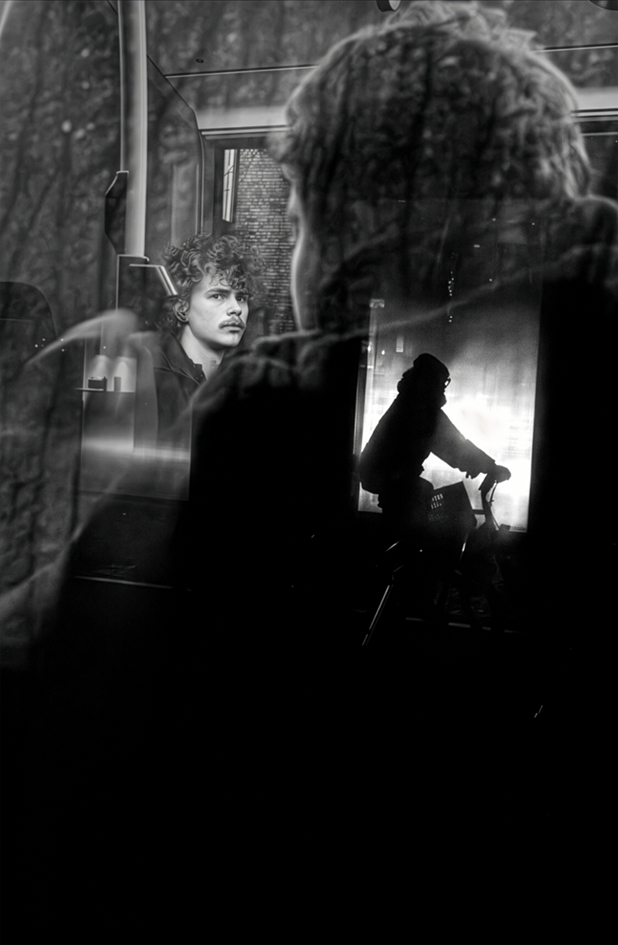
a man looks surprised —
another frames a biker.
Wait…we’re all framed too!
Let’s depict it.
Line 1 sets the scene: someone reacting with surprise.
Line 2 adds a new layer: someone *framing *a cyclist (without noticing it)
Line 3 delivers a shift in perspective: the realization that everyone in the frame is “framed” in some way — literally, as in the photo, or metaphorically in life.
These three lines work as a haiku because they follow the syllable structure, capture a moment, and end with a turn. It uses minimal words to suggest something larger, which is at the heart of haiku. The text enhances the meaning of this photograph made close to a bus’s window on that night in the city center. Both capture a moment. They dance *together, merging what is *seen with what is felt.
Although the photograph works on its own, when mixed with those three lines, becomes different. The haiku serves as a lens, focusing attention while opening doors to new perspectives.
Yet another pairing based on a photograph I made a couple of years ago inside the Ribeira tunnel in downtown Porto. The composition isn’t groundbreaking, and I got lucky with the wet sidewalk behind the subject. The haiku brings the photograph to life, showing how words can reshape an image.
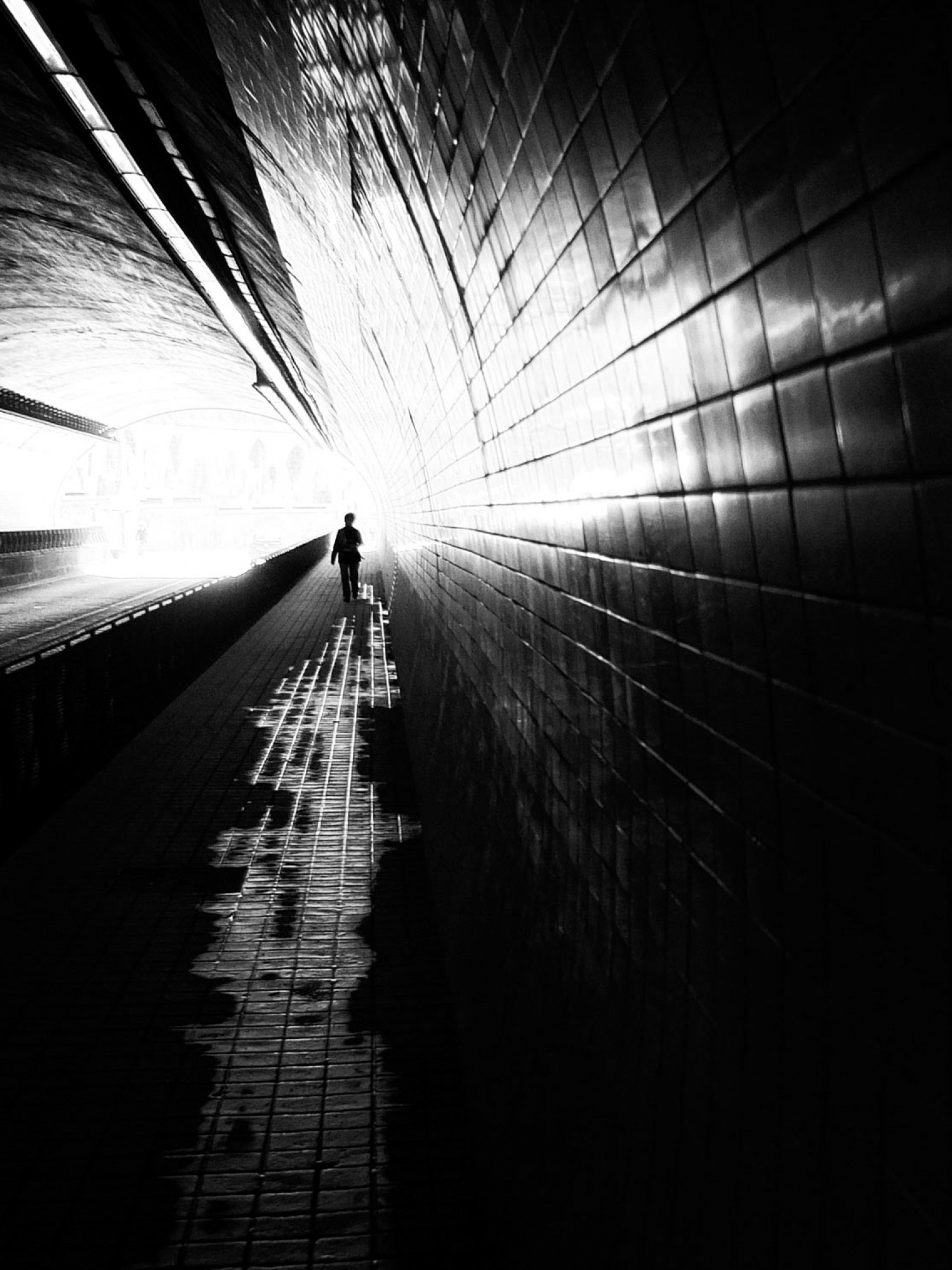
blood is flowing out —
she just made it out alive
freedom lies ahead
The words don’t explain the photograph; they expand it, suggesting a narrative of danger, survival, and hope.
Poetry for the rest of us
The writing process itself is a delightful puzzle — working within the 5–7–5 structure forces precision and economy.
As I look at the photograph and picture myself there again while releasing the shutter, I often jot down initial impressions, then refine and reshape until the syllables and the juxtaposition align with both the formal requirements and the emotional substance of the photograph. It’s a puzzle, and a fun one to solve. With only seventeen syllables and three lines to create a meaningful symbiosis with your imagery, every word must earn its place.
Observe, close your eyes, and choose the strongest line of the script suggested by your photograph. The rest will come naturally.
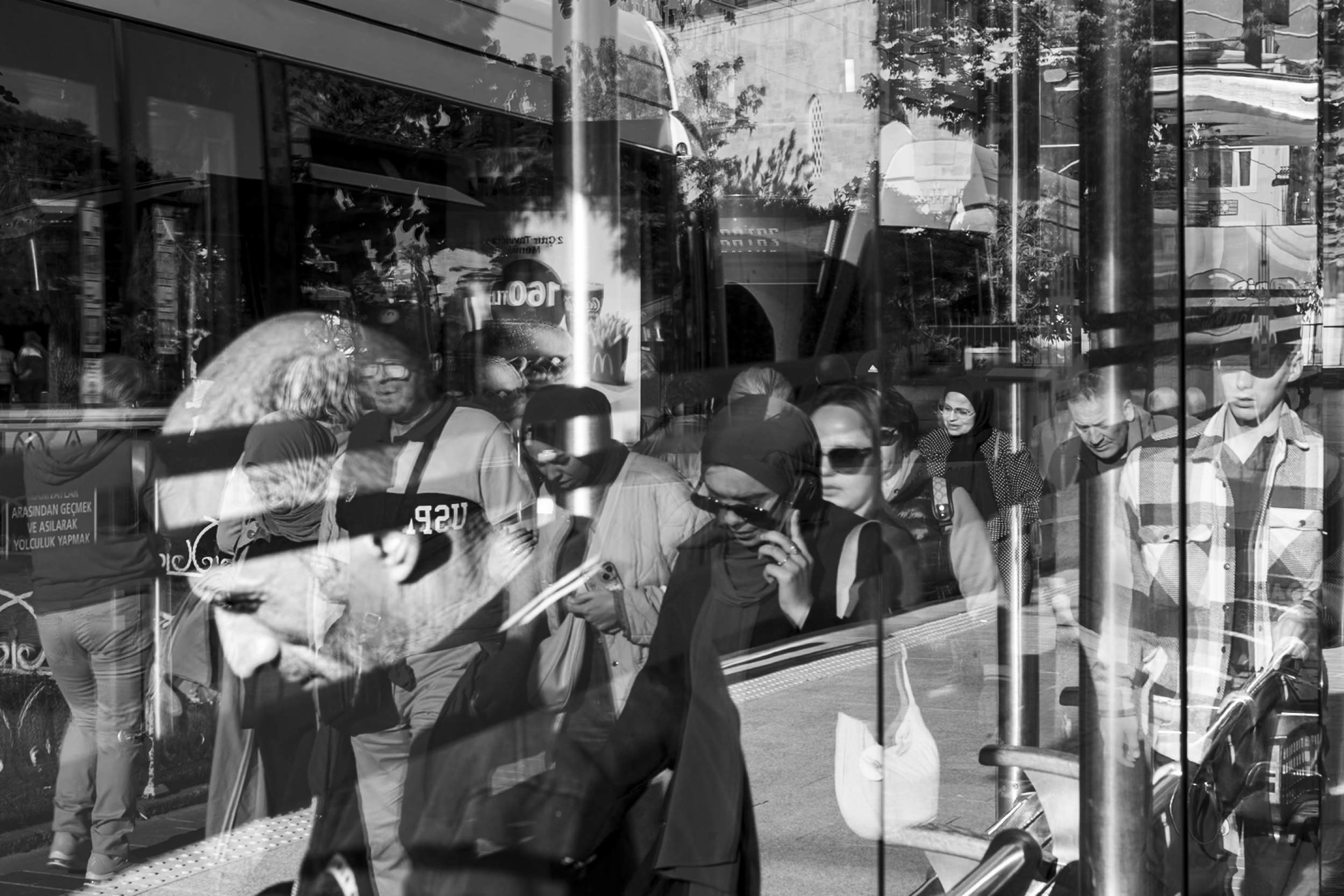
the bald man, elsewhere —
commuters pass through his thoughts,
lost in their own worlds
Being a street photographer doesn’t necessarily mean that you only make photographs on the street. Photography and words dancing together can generate fresh meaning and give different perspectives.
Each haiku acts as both a companion and a counterpoint to its paired photograph, creating a dialogue that reveals unexpected connections.
Most importantly, combining these media strengthens both — the image gives context to the poem, and the poem adds emotional dimension to the image.
In a world of constant noise, where images flood our senses and words often go unheard, merging photography with haiku offers a fresh and quiet angle that invites you to pause and reflect.
Have you ever tried combining your photography with poetry or other written forms?
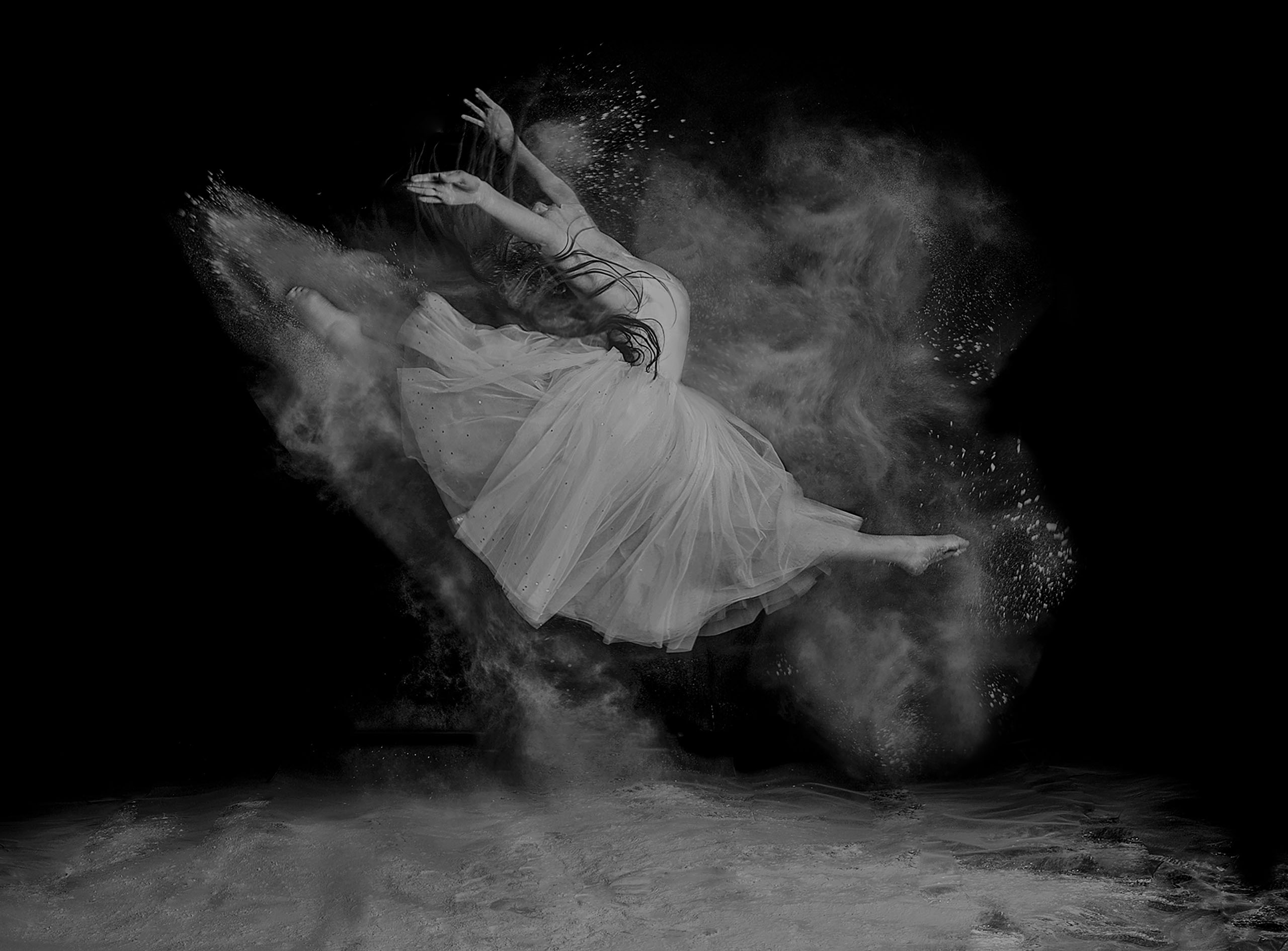
You may discover stories about the power of purifying rain…
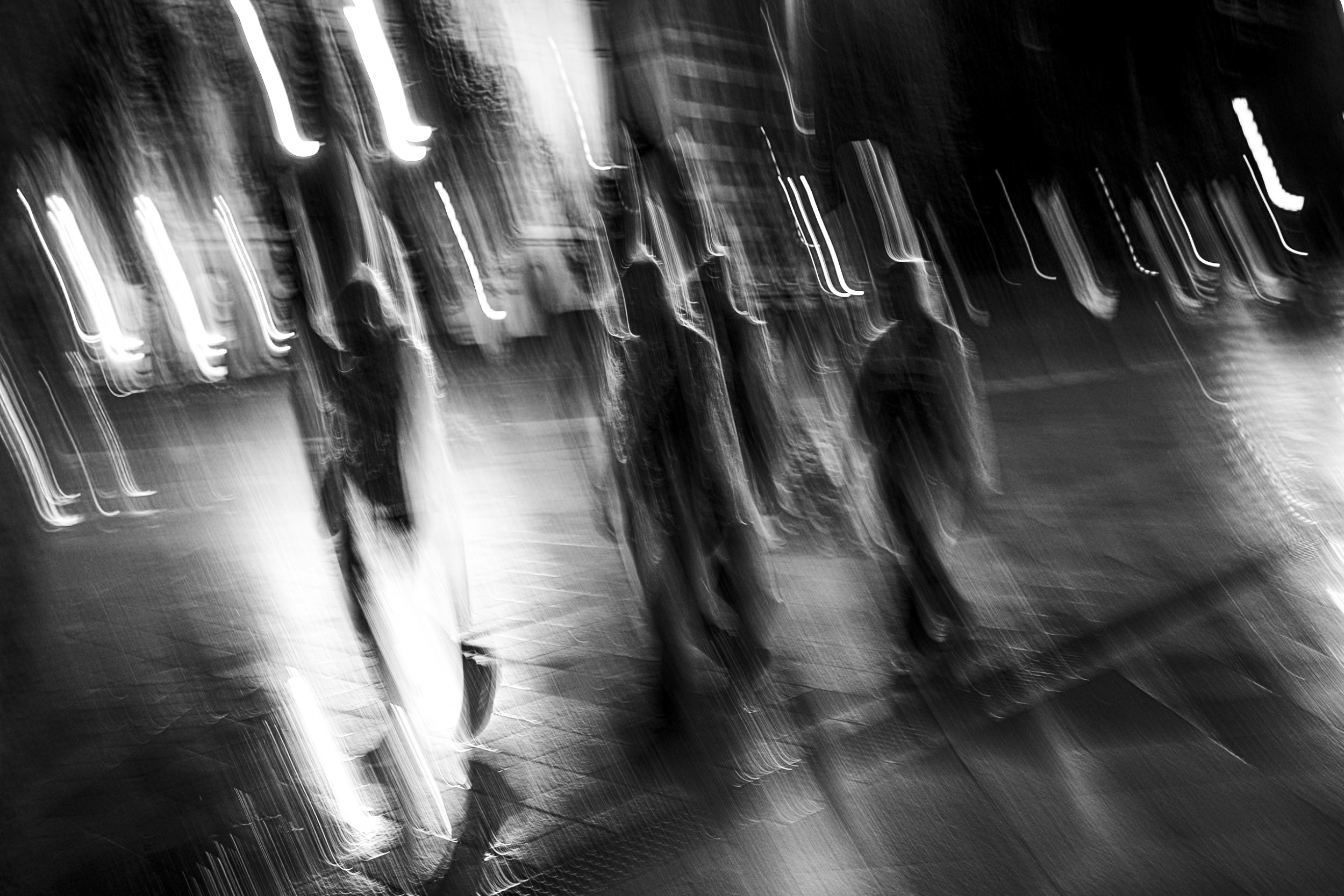
the harsh day is gone —
rain city night unfolds
water smooths their souls
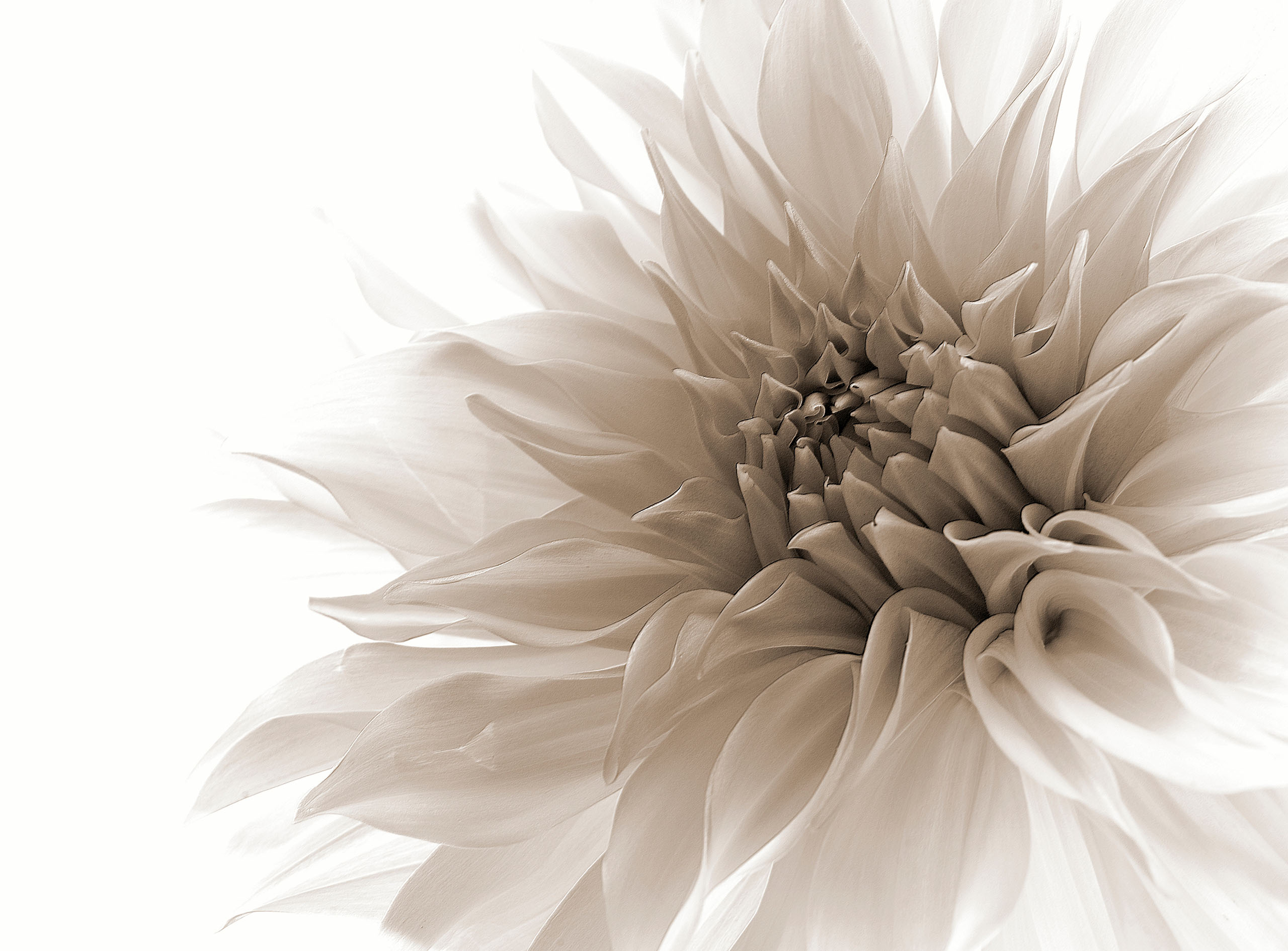
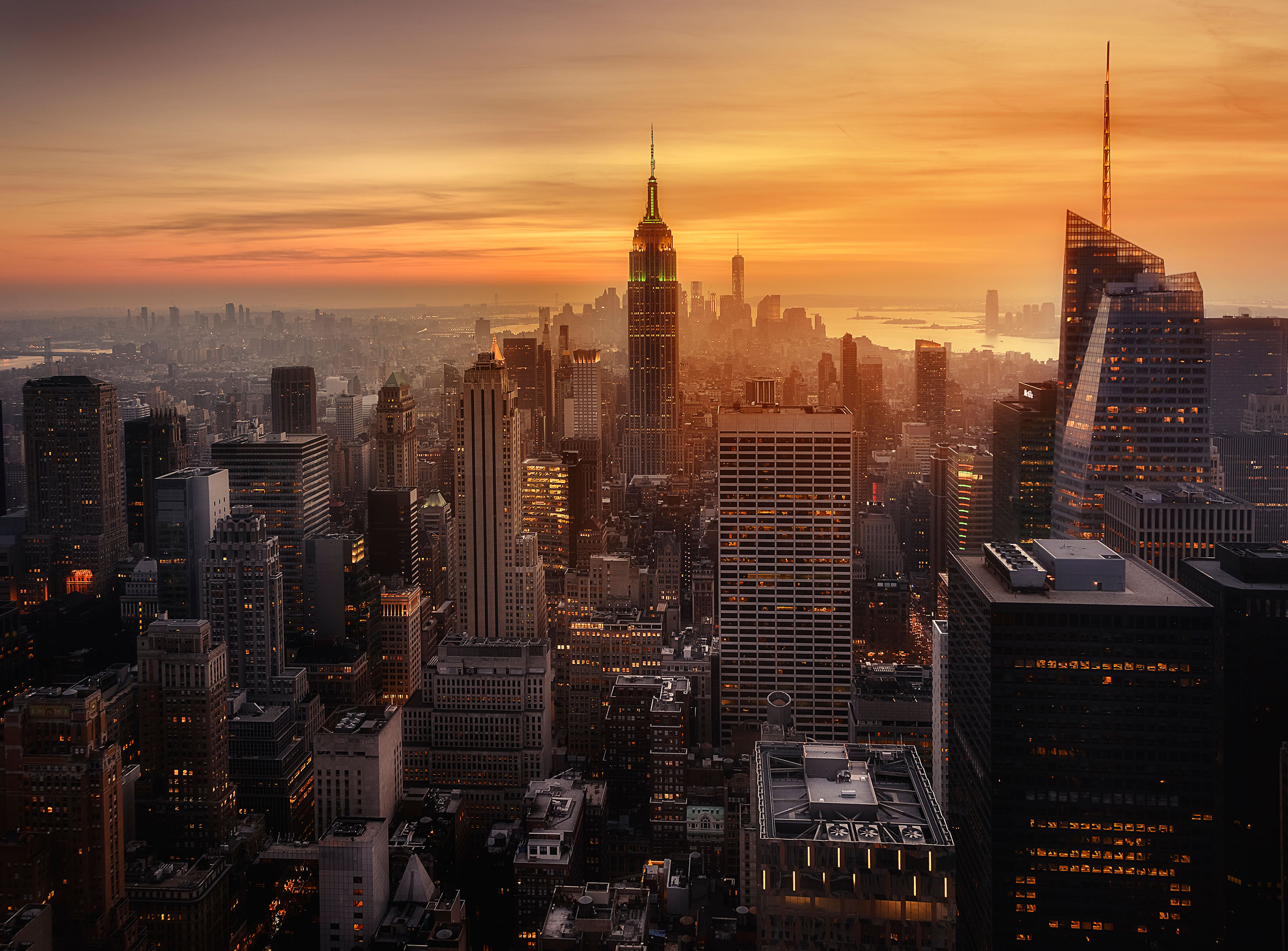
Ephemerality…
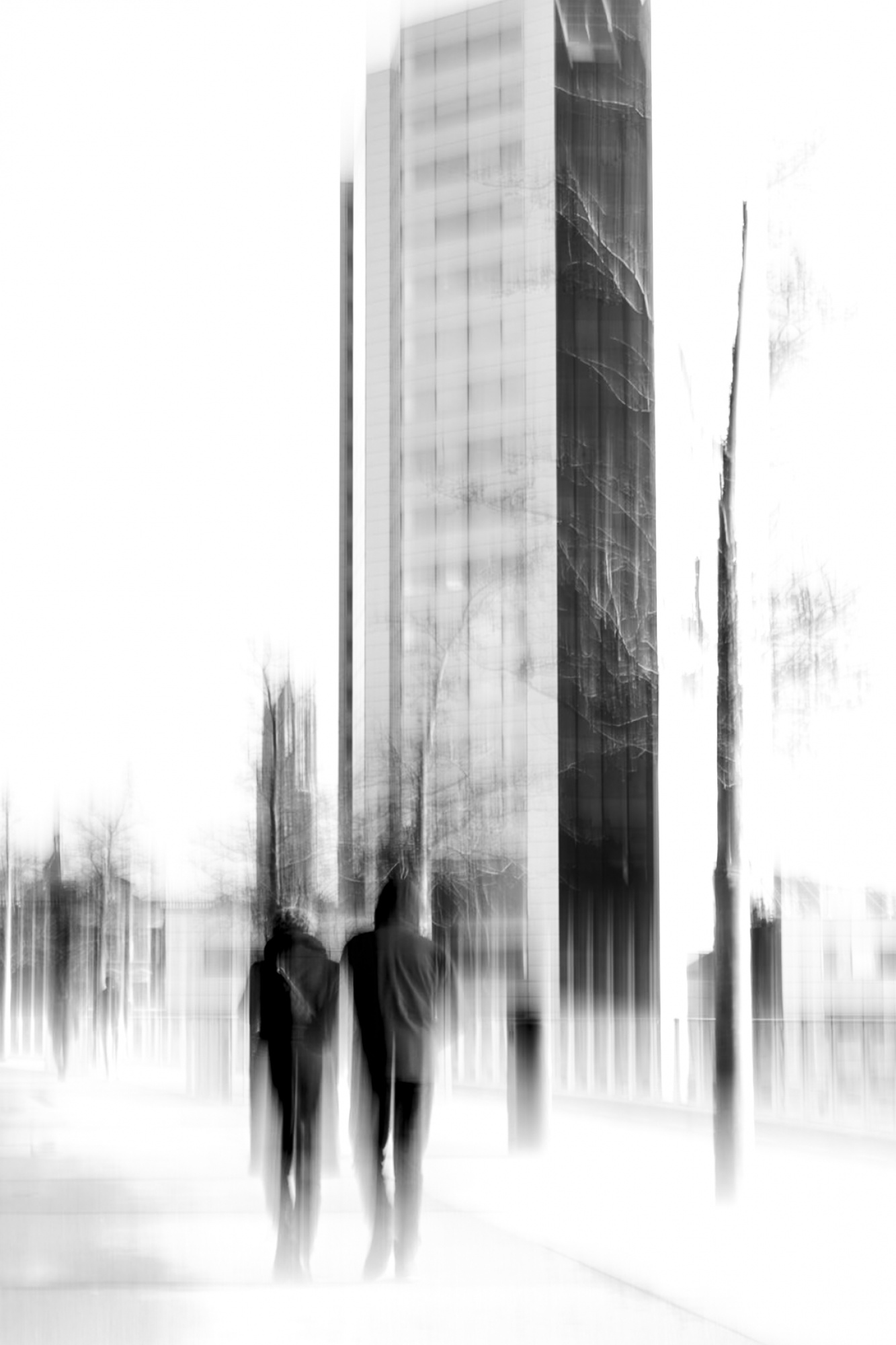
together they go
the obelisk is waiting —
together they fade…
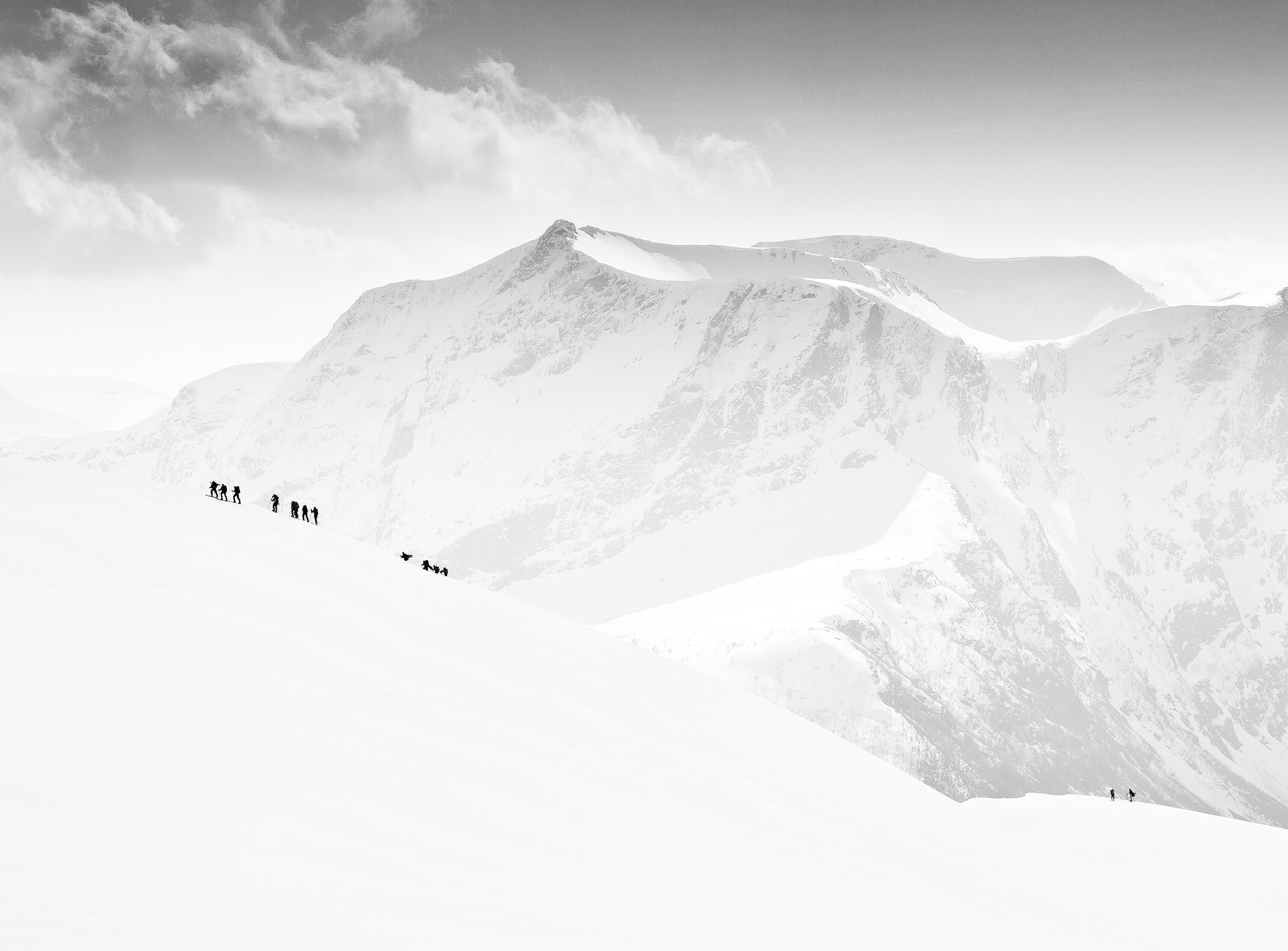
Or, close encounters…
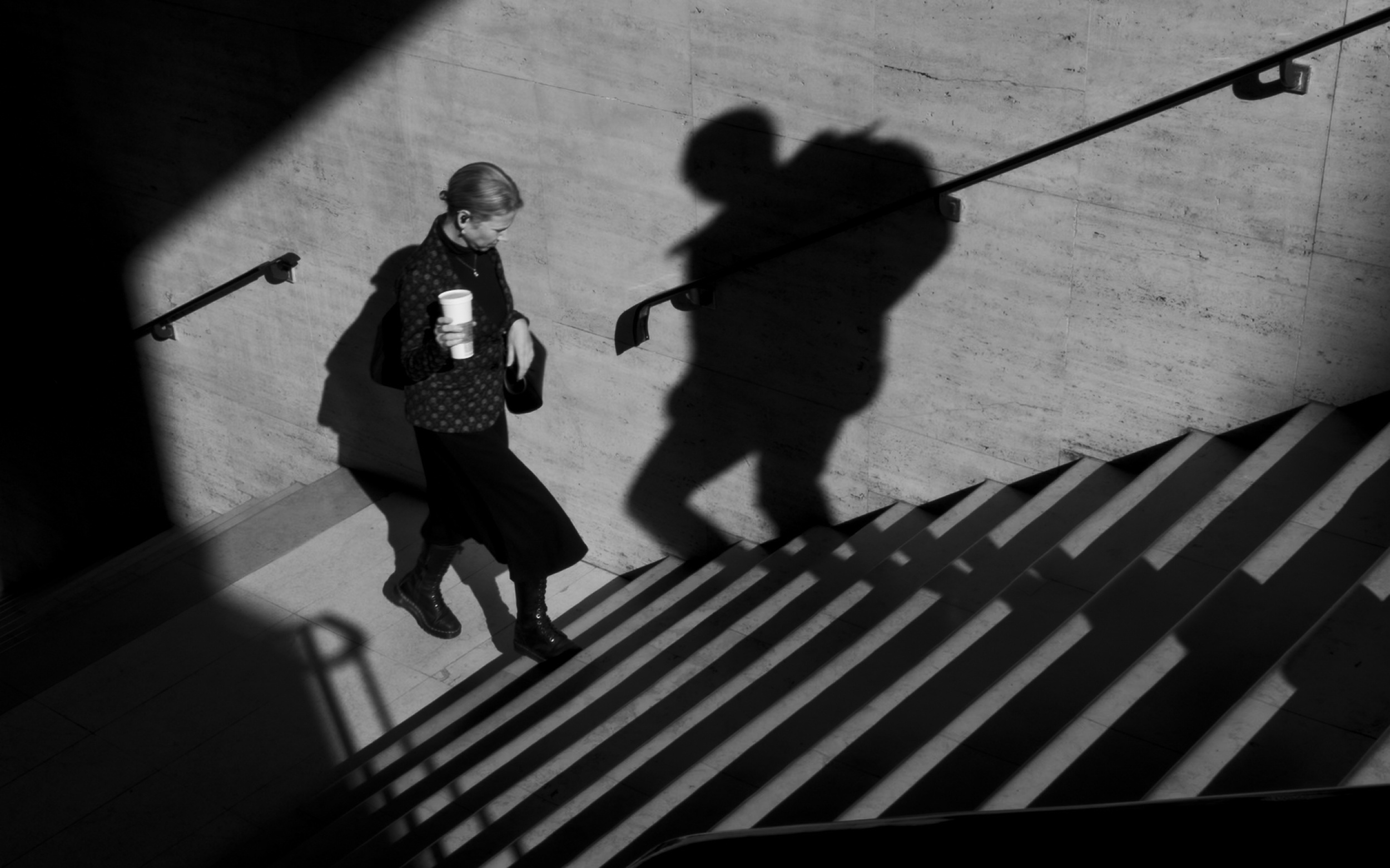
impermanence walks —
bodies rise, shadows descend,
anonymous clash
“When people look at my pictures I want them to feel the way they do when they want to read a line of a poem twice.”
~ Robert Frank ~
 | Write |
 | Cicek Kiral CREW Thank you for both the article and the photographs...Congratulations... I am always ready to see more. Thanks also to Fernando and dear Yvette... |
 | Christof Mueller PRO I very much agree with the article. Thank you for this. It is often said that a picture is worth a thousand words. A haiku or a poem, in turn, can distil a whole moment, a mood, sometimes even an entire world into just a few words. To me, image and poem are not in competition; they can complement one another beautifully and deepen the way we see the subject. |
 | Roberto Miniero PRO Thank you for your article. I enjoy the pics with differenti layers |
 | Steven T CREW Fernando,
Haiku to thank you / for photographs, thoughts, and words / in a fine balance |
| | Steven T CREW Fernando . . . .
Haiku to thank you
for photographs, thoughts, and words
in a fine balance |
 | Susi PRO What an interesting articule! The combination of images and syllables is beautiful. Thank you for sharing it. |